
Don't Let Winter Win: How Proper Ventilation Prevents Costly Ice Damming on Your Roof
Winter in Mississauga brings beautiful snowfalls, but for homeowners, it can also bring a sense of dread about what’s happening on the roof. One of the most common and destructive winter problems we see is ice damming. Those long, thick icicles hanging from the eaves might look pretty, but they are often a sign of a serious issue that can lead to water backing up under your shingles and leaking into your home. The good news is that this problem is preventable. The secret isn't just about piling on more insulation; it's about creating a balanced, properly ventilated roof system. At Sheriff Roofing, we help homeowners understand how their roof is supposed to work, protecting their investment from the harsh Ontario climate.
What Exactly is an Ice Dam?
An ice dam is a ridge of ice that forms at the edge of a roof, preventing melting snow (water) from draining off. It happens when the upper part of your roof is warmer than the freezing point, while the lower edge (the eaves) is below freezing. Here’s the step-by-step process:
- Heat Escapes: Warm air from your living space rises into the attic. If the attic floor isn't well-insulated and air-sealed, this heat warms the underside of your roof deck.
- Snow Melts: The snow on the upper, warmer part of the roof melts and flows down toward the eavestroughs.
- Water Refreezes: When the water reaches the cold overhangs and eavestroughs—which aren't heated by the attic—it refreezes, creating a small ridge of ice.
- The Dam Grows: As more water flows down and freezes, this ridge grows into a thick, solid dam.
This dam traps a pool of water behind it. With nowhere to go, this water can seep underneath shingles, through the roof deck, and into your attic and walls. This can lead to rotted wood, saturated insulation, stained ceilings, and even mold growth—all of which are costly and stressful problems to fix.
The Solution: A Cool Roof Through Balanced Ventilation
The most effective, long-term solution to preventing ice dams is to keep your entire roof surface consistently cold. This is achieved with a balanced ventilation system. The goal is to have a continuous flow of cold, dry winter air moving through your attic, from the bottom to the top. This keeps the roof deck at the same temperature as the outside air, so the snow on top melts evenly and naturally, rather than from heat escaping your home.
A balanced system requires two key components:
- Intake Vents: Located at the lowest part of the roof, typically in the soffits (the underside of your roof's overhang). These vents allow cold, fresh air to enter the attic.
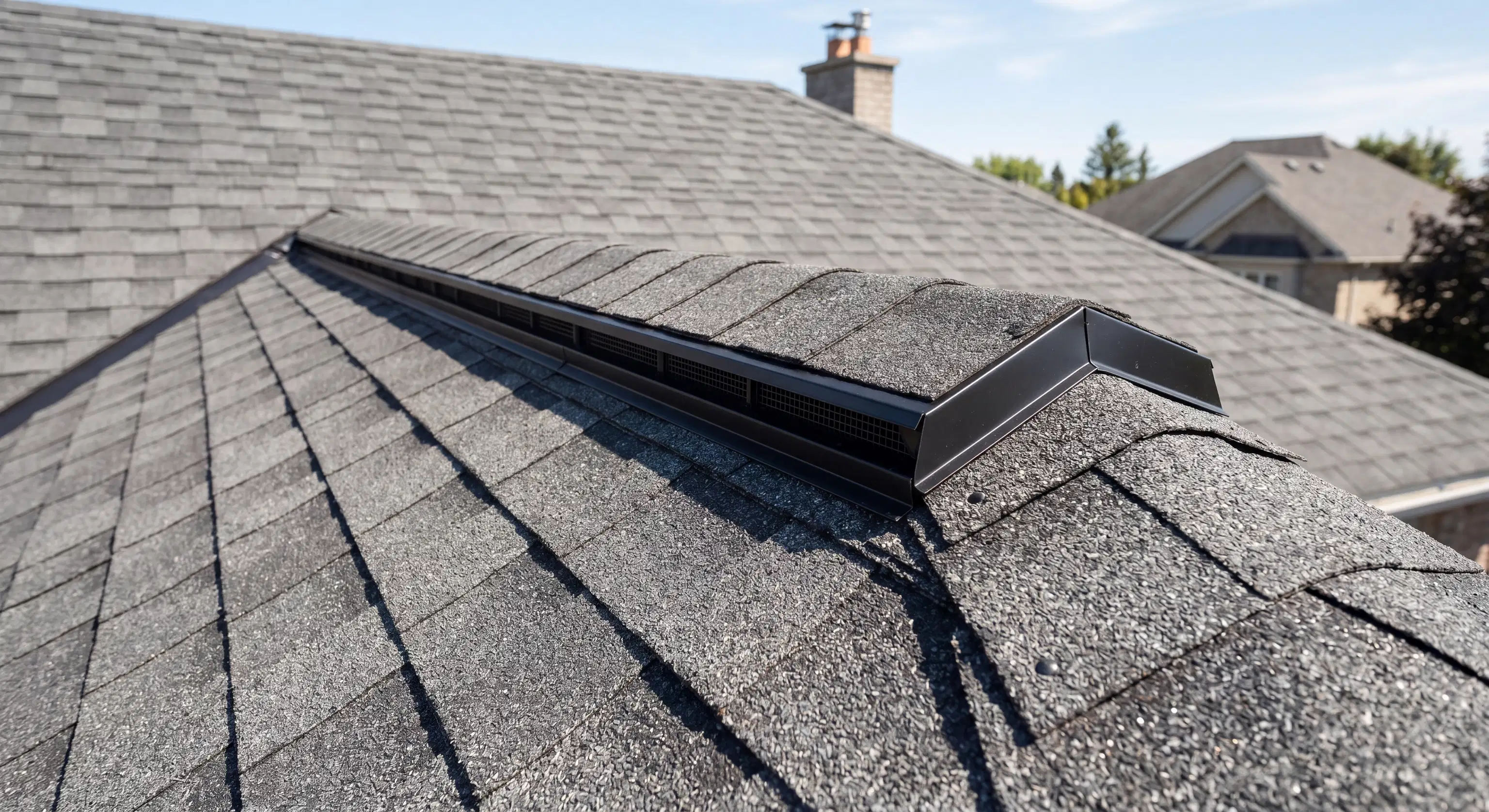
- Exhaust Vents: Located at or near the highest point of the roof, such as ridge vents. These allow the warmer, moist air to escape.
This constant circulation prevents heat buildup, stops the melt-and-refreeze cycle before it starts, and also helps remove moisture from your attic year-round. During our roofing projects, we always ensure a proper ventilation system, including features like ridge vents, is part of the complete package.

Signs Your Roof's Ventilation is Underperforming
How can you tell if your home is at risk? You don't have to wait for a leak to appear. Here are a few warning signs that your roof ventilation may be inadequate:
- Thick Ice Buildup: You consistently see thick ridges of ice along your eavestroughs, not just a few harmless icicles.
- Attic Frost: On a cold day, look inside your attic. If you see frost or moisture on the underside of the roof sheathing or on the nails, it’s a clear sign that warm, moist air is trapped.
- Stuffy Upper Floors: In the summer, poor ventilation can trap super-heated air in the attic, making your home's upper level uncomfortably warm and driving up air conditioning costs.
- Water Stains: Any discoloration on your ceilings or walls, especially near the exterior walls, could be a symptom of water backing up from an ice dam.
Addressing these signs early with a proper roof maintenance plan or a system upgrade can save you from much bigger headaches down the road.
Protect Your Home This Winter
While heavy snow and freezing temperatures are a given, ice dams don't have to be. A properly installed, balanced ventilation system, combined with adequate attic insulation, is the best defense for protecting your home's structure and value. It’s a critical part of a healthy roofing system that works for you in every season.
If you've noticed any of the warning signs or are concerned about your roof's performance this winter, don't wait for damage to occur. Contact the experts at Sheriff Roofing today. We can provide a thorough inspection of your roof and attic to ensure your home in Mississauga is prepared for whatever the weather brings. Let us help you achieve peace of mind with a safe, durable, and well-ventilated roof.